When you're missing a tooth, Dr. C can help restore your smile using either a dental bridge or a dental implant. Both are excellent options, but they work in different ways and offer distinct advantages.
Bridging the Gap
A dental bridge literally "bridges" the gap left by a lost tooth. This restoration attaches to the natural teeth on both sides of the gap, using them as anchors. The bridge includes a prosthetic tooth (or teeth) that fills the space, creating a seamless appearance. While bridges are a time-tested solution, they do require reshaping the adjacent teeth to support the restoration.
Understanding Dental Implants
A dental implant is a standalone replacement that doesn't rely on neighboring teeth. Dr. C places a biocompatible titanium post into your jawbone, which acts as a prosthetic tooth root. Once your implant is fully integrated with your bone, a custom crown is attached to the implant, giving you a replacement tooth that functions independently.
Key differences include:
- Impact on adjacent teeth — Bridges require altering healthy neighboring teeth, while implants preserve them completely.
- Bone preservation — Implants stimulate the jawbone like natural tooth roots, preventing bone loss. Bridges don't provide this stimulation.
- Longevity — Implants can last a lifetime with proper care, while bridges typically need replacement after 10-15 years.
- Treatment time — Bridges can be completed in a few weeks, while implants require several months for full integration.
Contact Castleberry Dental
During your consultation at our Ellsworth dental office, Dr. C will evaluate your specific situation and help you choose the best option for your smile, health, and lifestyle.

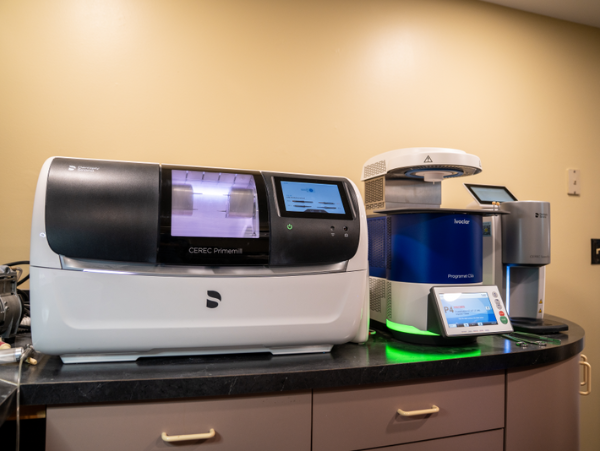 A dental crown is one of the best options Dr. C can use to repair a decayed, fractured, or broken tooth. With our state-of-the-art CEREC technology, he can design, mill, and place a new crown in a single appointment at our Ellsworth dental office, so you don’t have to wait weeks for your new restoration.